
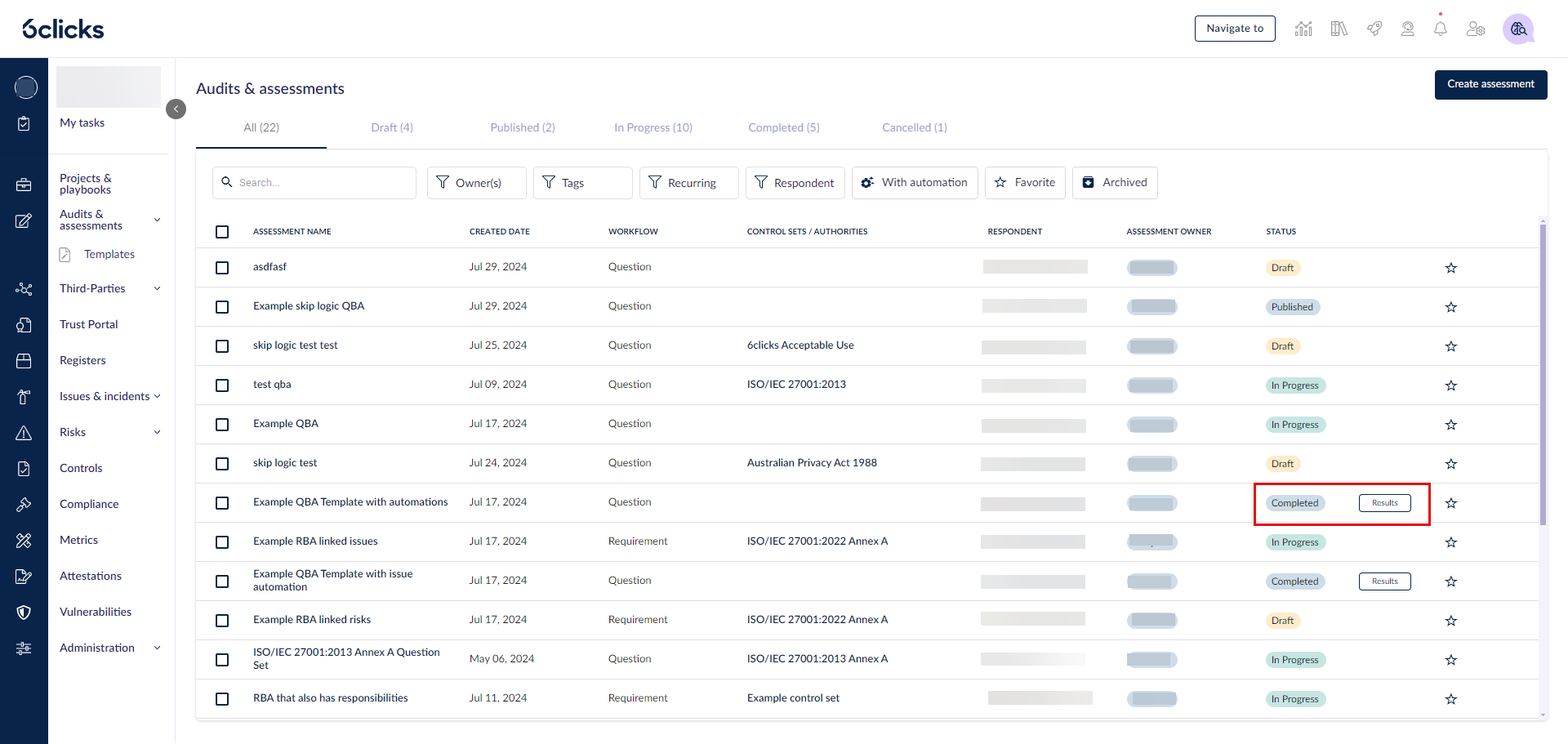
When all respondents of a Question-Based Assessment (QBA) submit their responses, the status of the QBA will change from In Progress to Completed. Click on Results next to the status.
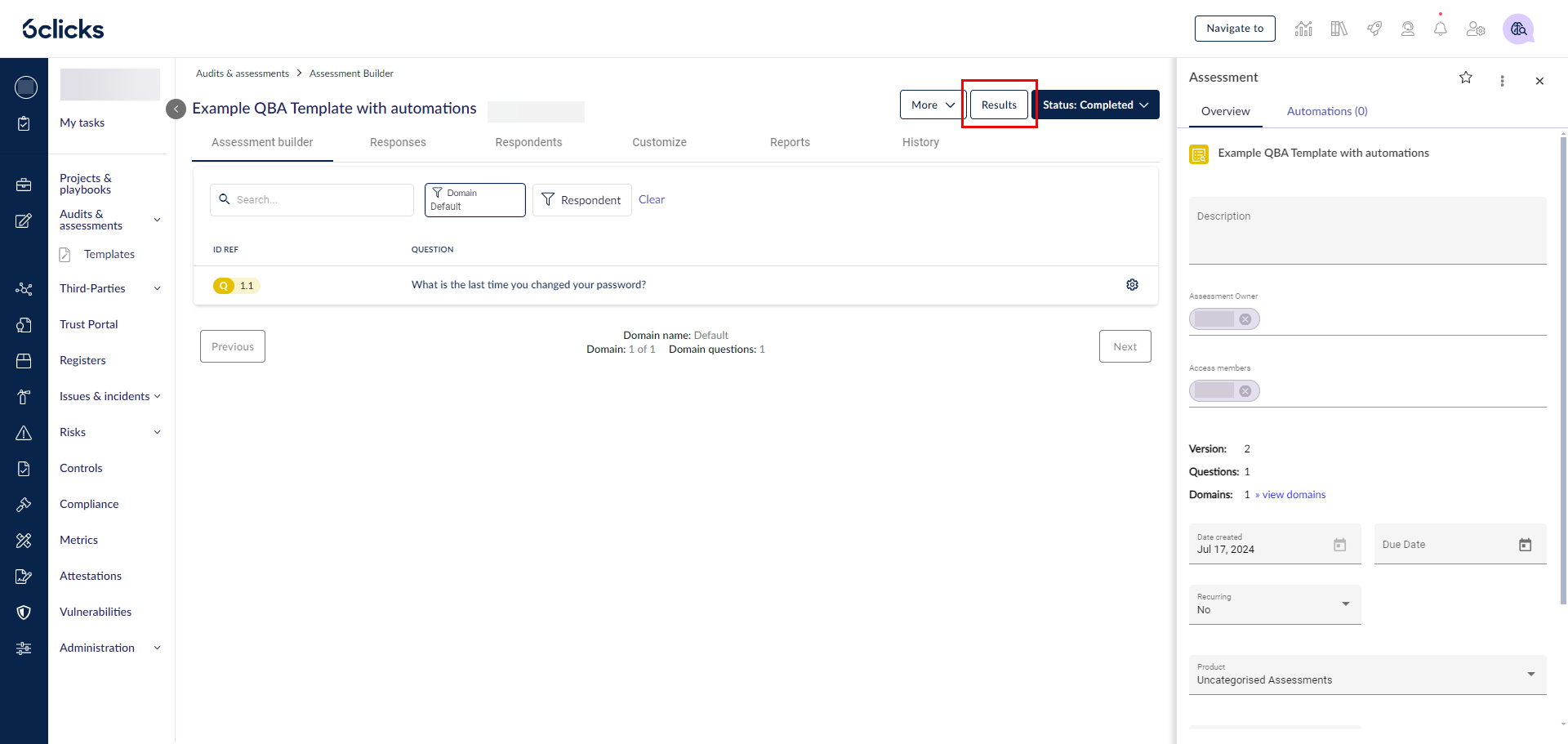
Alternatively, click on the completed assessment and click Results in the top right corner.
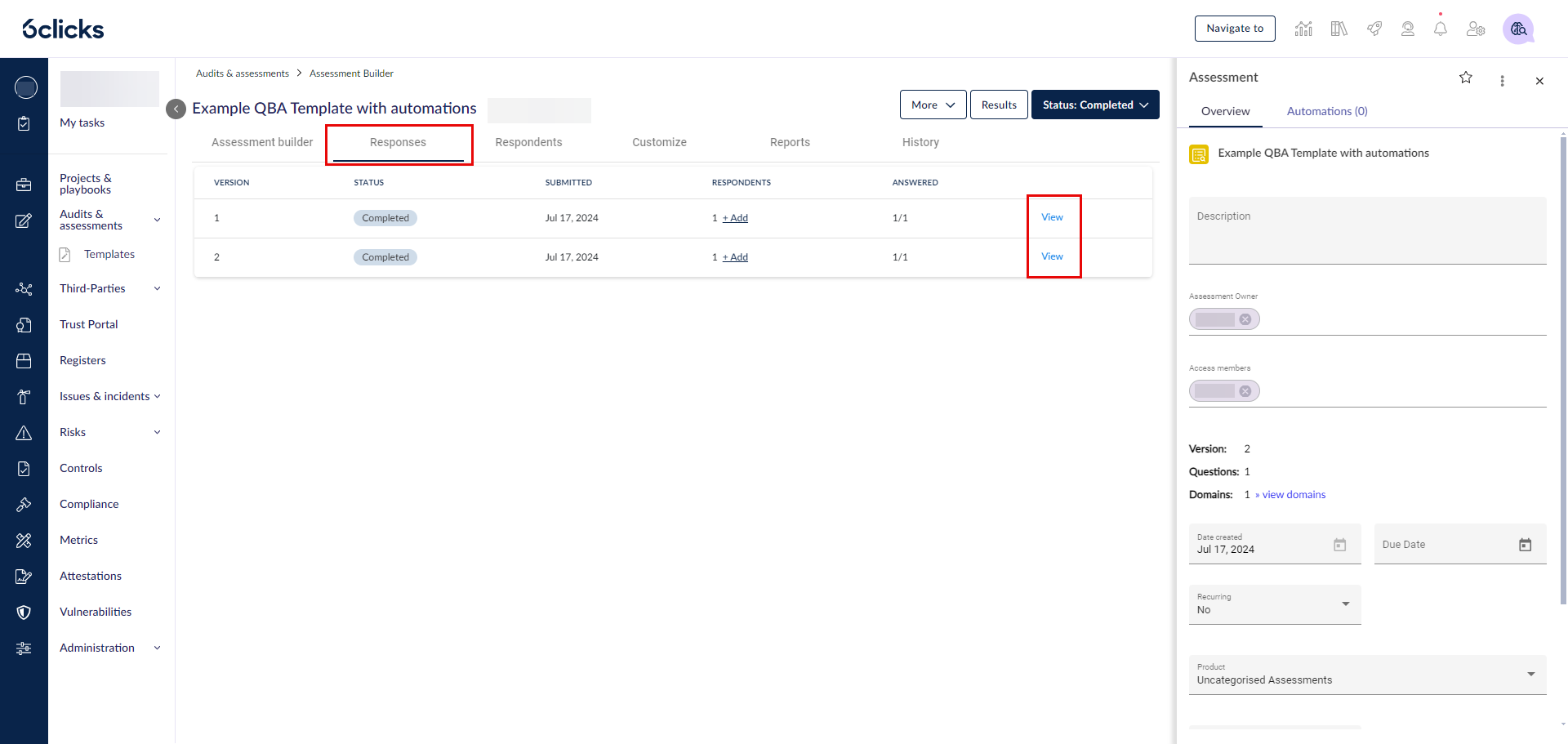
The Responses tab lets you see different versions, if any. Clicking on View next to a version leads you to the Assessment Results screen for that particular version.
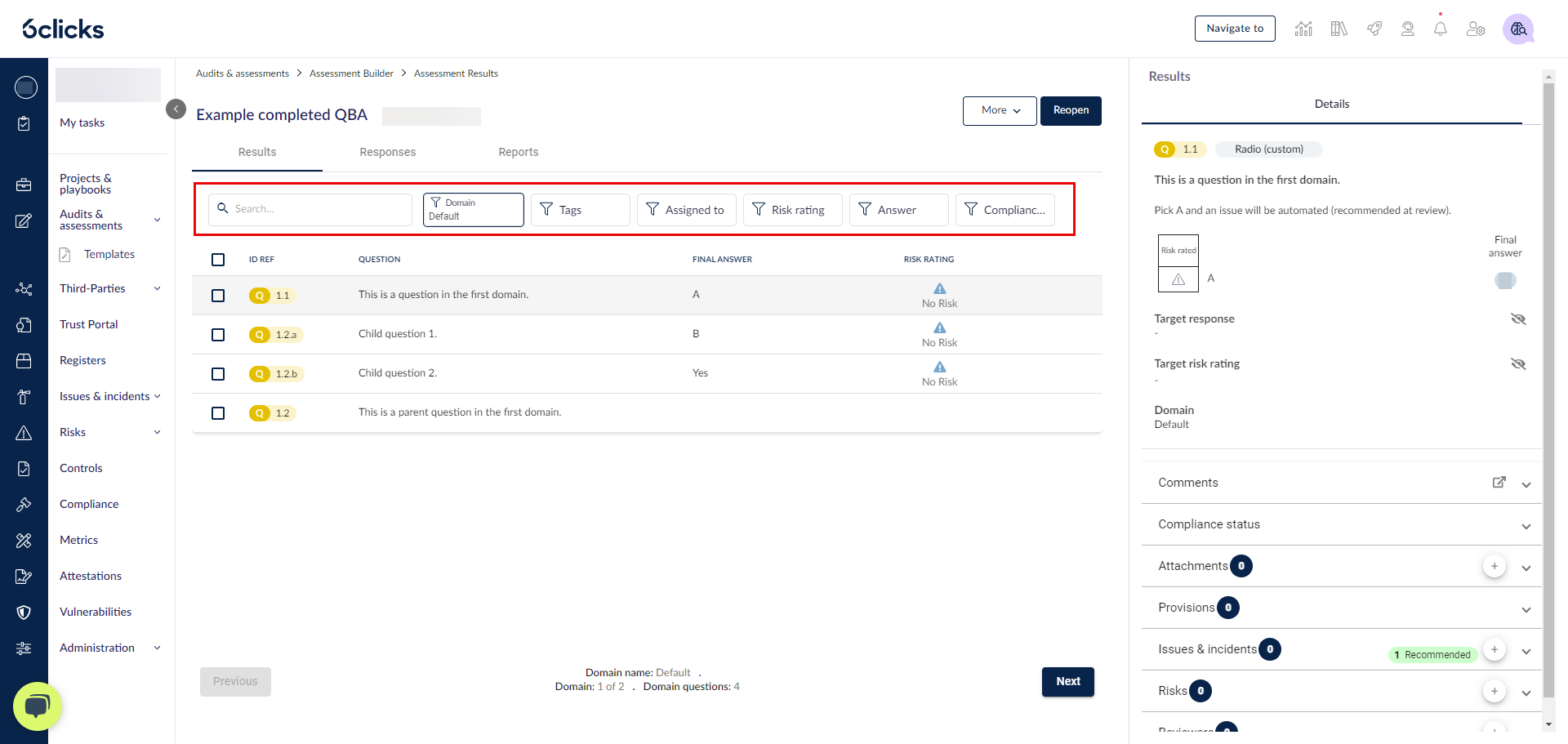
The Assessment Results screen allows you to review results and remediate identified areas of concern. Its different sections are listed below.
- Question and answer filters
- Answer details
- Comments
- Review Trail
- Setting compliance status
- Attachments
- Linked provisions/controls
- Linked issues & issue actions
- Linked risks & risk treatment plans
- Assigning reviewers to questions
- View Analytics
- Reassess
Question and answer filters
You can find specific questions by using the search and filters.
Questions are organised and grouped by domain. To toggle between each domain, select the Domain filter next to the search box.
Answer details
To view the details of a particular question, click on the question. Further information will be displayed on the right.
The rest of this article discusses each section of these details.
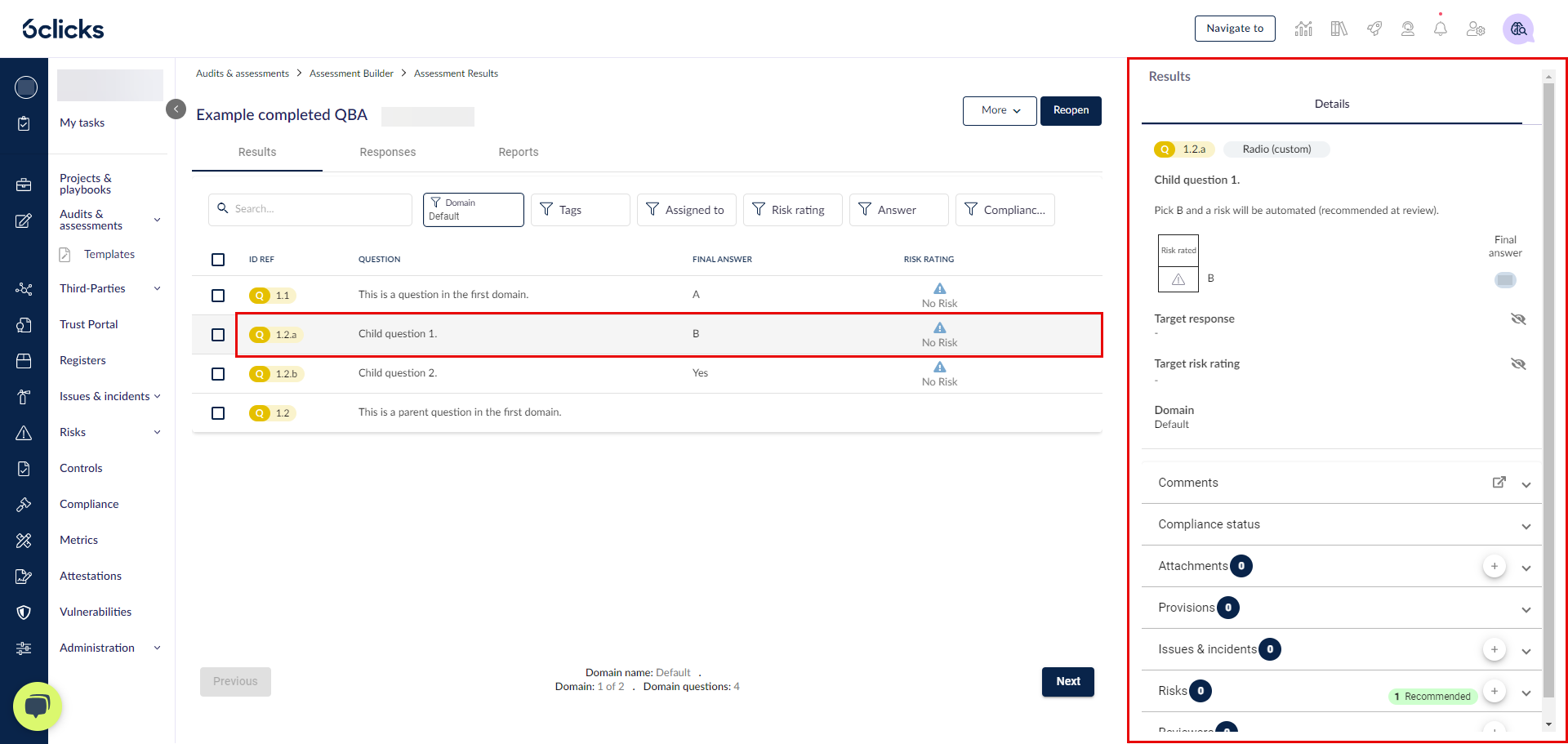
Comments
The Comments tab allows users to add comments to any assessment question to provide feedback, to ask questions, or to share additional context when reviewing responses.
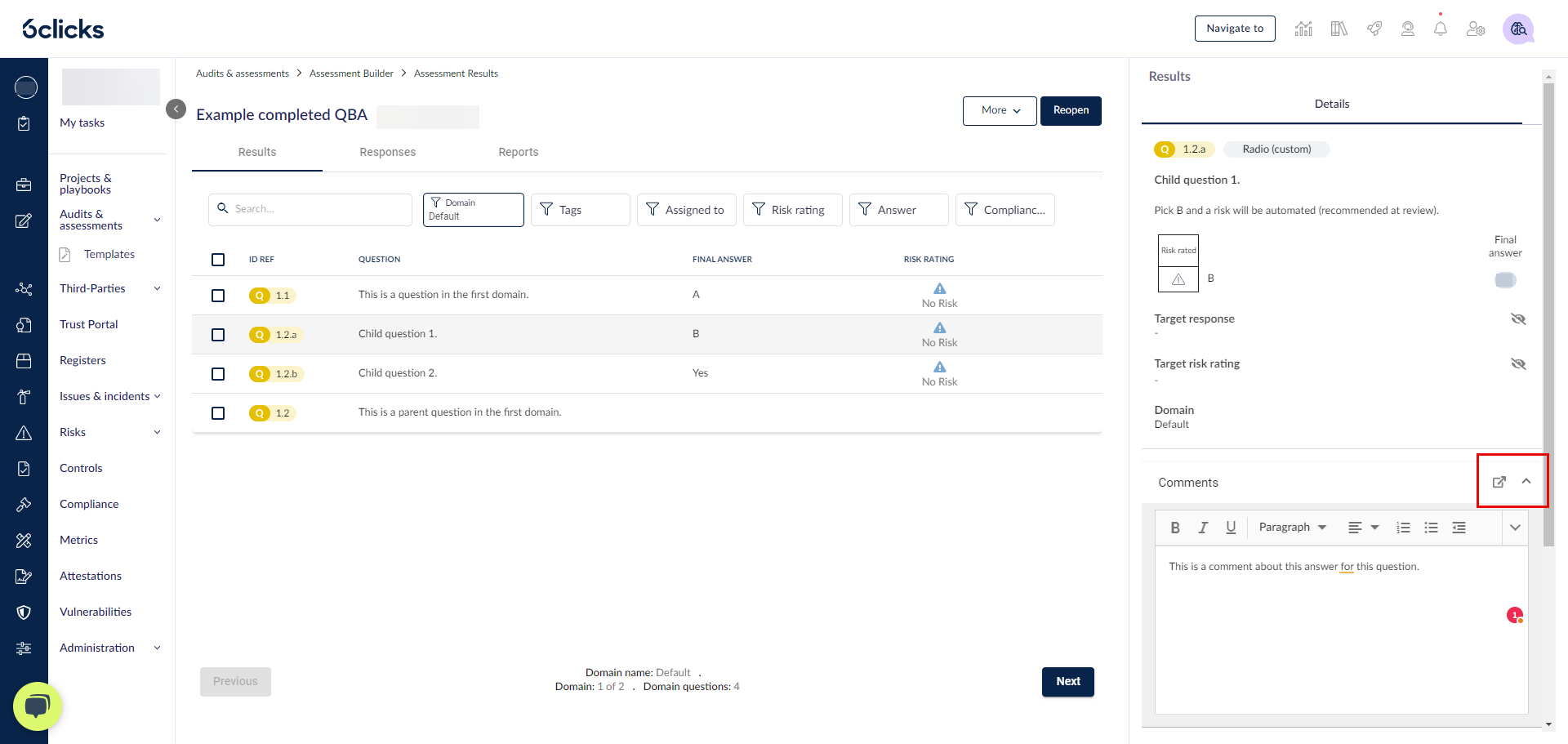
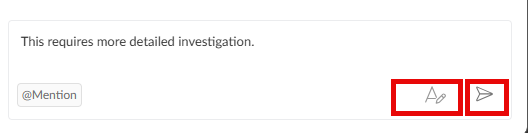
Once the comment has been written, you can adjust the formatting by clicking on the A/text editor button to turn on rich text formatting. Press it again if you wish to return the comment in plain text.
To submit the comment, click on the arrow icon to the bottom right of the comment.
Users can notify other users or groups who have access to the assessment by tagging them with the @ symbol. When typing @, a list of users or groups with access to the assessment is displayed for selection. Tagged users are highlighted within the comment and receive both an in-app and email notification. Notifications include the assessment name, reference ID, question name, and a direct link to navigate to the relevant question.
Comments assigned to a user will also appear in the user’s My Tasks view.
Key behaviour:
- Only comments specifically assigned to the user are displayed in My Tasks.
- Each task displays the relevant assessment name and a snippet of the assigned comment.
- Clicking the assessment name takes the user to the assessment response or results page.
- Clicking the comment snippet takes the user directly to the relevant question in the QBA.
- When navigating through the comment snippet, the relevant question is opened with the Comments tab selected.
- Tasks are updated when a comment is assigned, read, resolved, or reopened.
- Only comments from assessments that the user has permission to access are displayed.
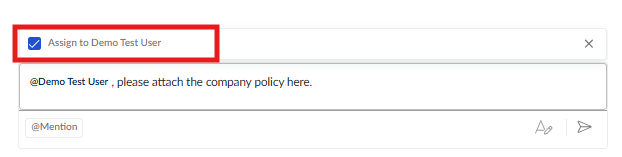
Users can also assign comments to another user to make them accountable for an action by clicking on the @Mention icon in the comment. Comments can be assigned during comment creation or editing, and the assigned user is clearly displayed within the comment. Assigned users receive notifications when a comment is assigned to them. Assignments can be updated or removed at any time, and if a comment is reassigned, both the previous assignee and the new assignee are notified.
Authorized users can add, edit, or delete their own comments at any time. Each comment displays the author, timestamp, and comment content. All comments remain visible to users with access to the assessment.
Comments can be marked as Resolved to help track completed discussions. Only comments that have been assigned to a user can be marked as resolved or unresolved.
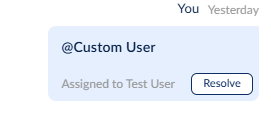
Resolved comments are visually differentiated from unresolved comments, and the Resolve and Unresolve actions are visible to all users with access to the assessment. If additional discussion is required on a resolved comment, users can reopen the comment before adding further updates, as each requirement supports a single comment thread.
Existing comments: The existing review comments section has been renamed to Archived comments. Archived comments are available in read-only mode. An inline message will be displayed:
Archived comments are read-only. Use the Comments tab for new discussions.
Review Trail
Once the assessment is completed, a Review Trail tab becomes available, providing:
- Complete comment history for each question
- Visibility into all discussion threads
- A full audit trail of collaboration that occurred during the assessment response process
Setting compliance status
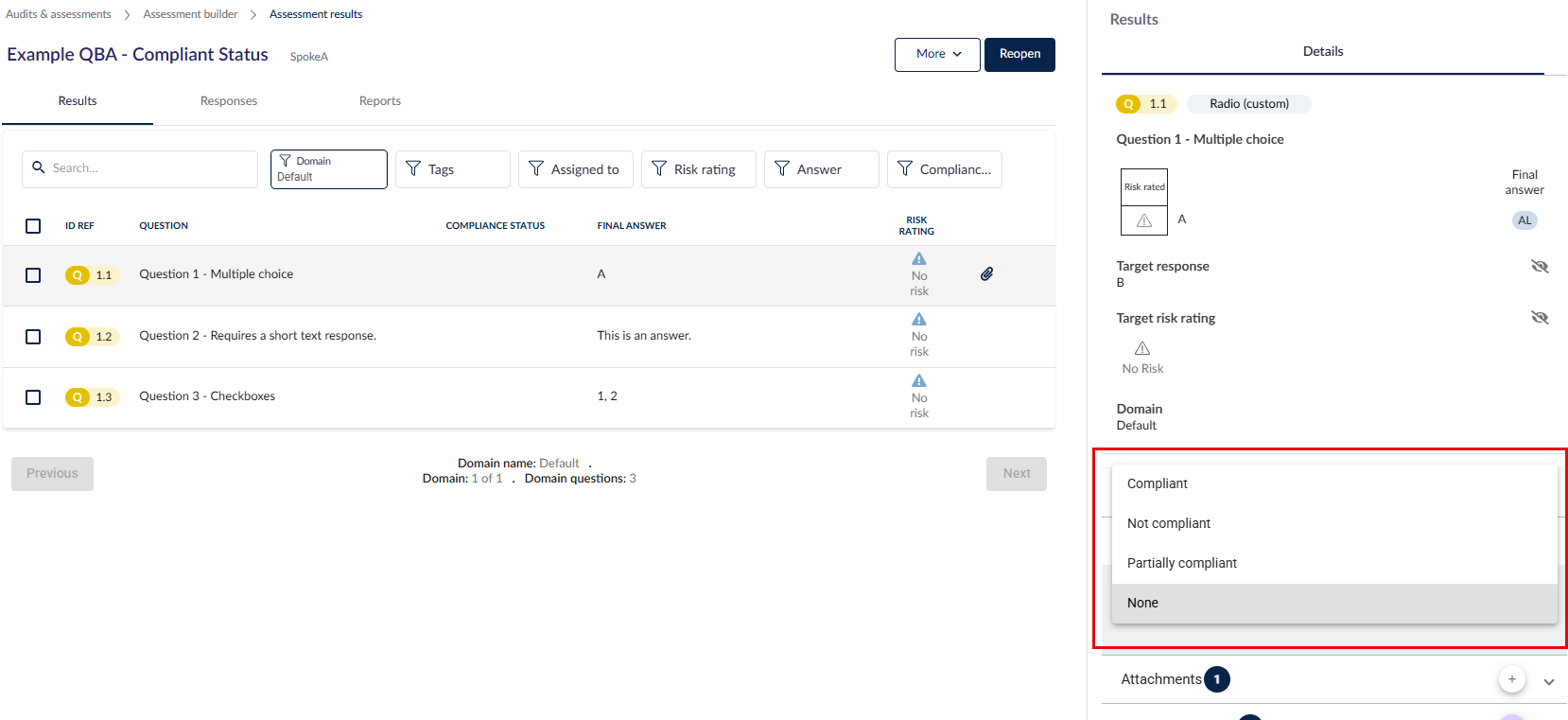
The compliance status allows you to quickly flag responses for being compliant or not compliant. To change the compliance status, click on the arrow next to Compliance status and use the dropdown. The available options are:
- Compliant
- Not compliant
- Partially compliant
- None
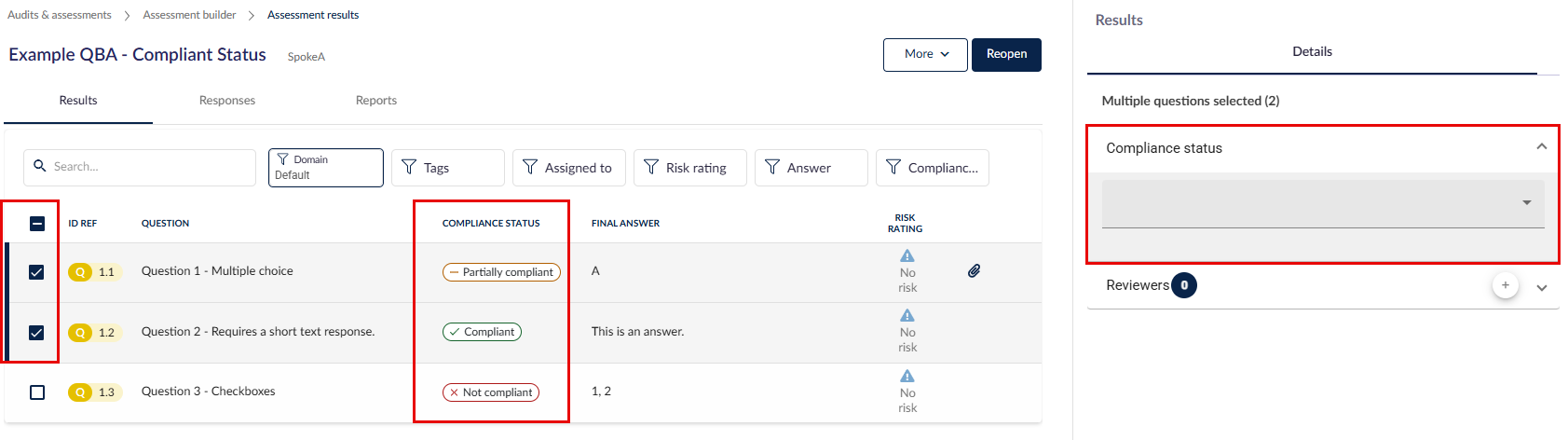
Set compliance status for multiple questions by using the checkboxes next to the questions. Once selected, the compliance status for each question is shown in the table column.
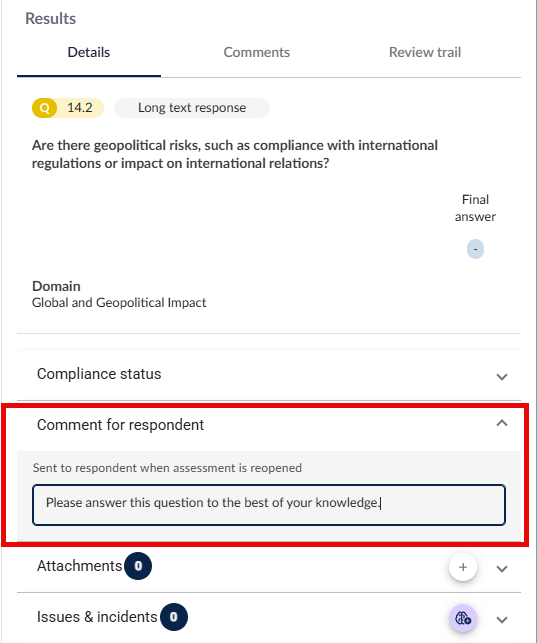
Reviewer Adds Comments During Review
While reviewing responses and assigning compliance statuses, reviewers can leave comments directly against individual questions.
This allows feedback to be captured at the time of review, eliminating the need to recreate feedback later when reopening the assessment.
Attachments
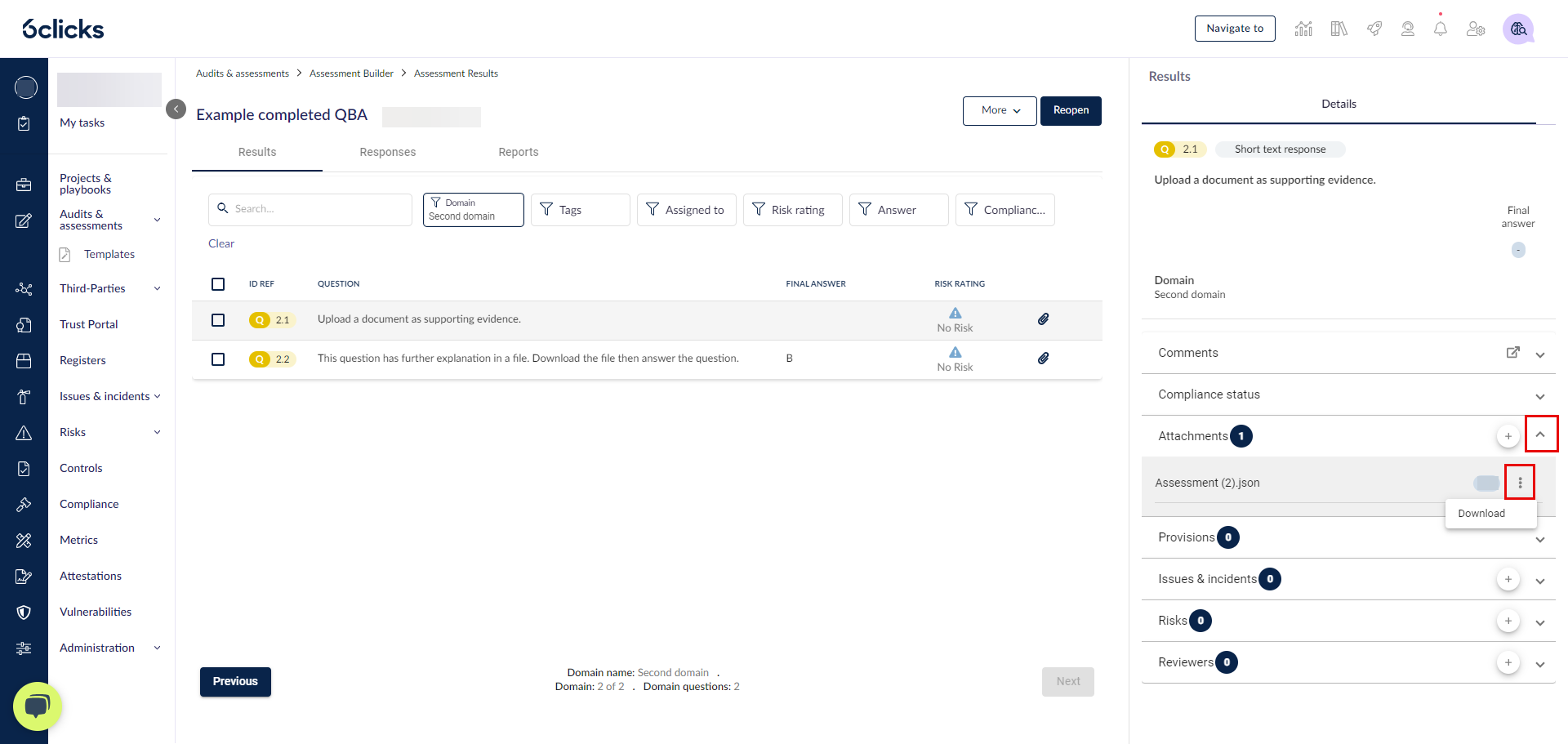
If a respondent uploaded documents when they answered a question, you can access them from the Attachments section. Click on the 3 dots to the right of an attachment to download it.
You can also upload documents when reviewing by clicking on the + next to Attachments.
Linked provisions/controls
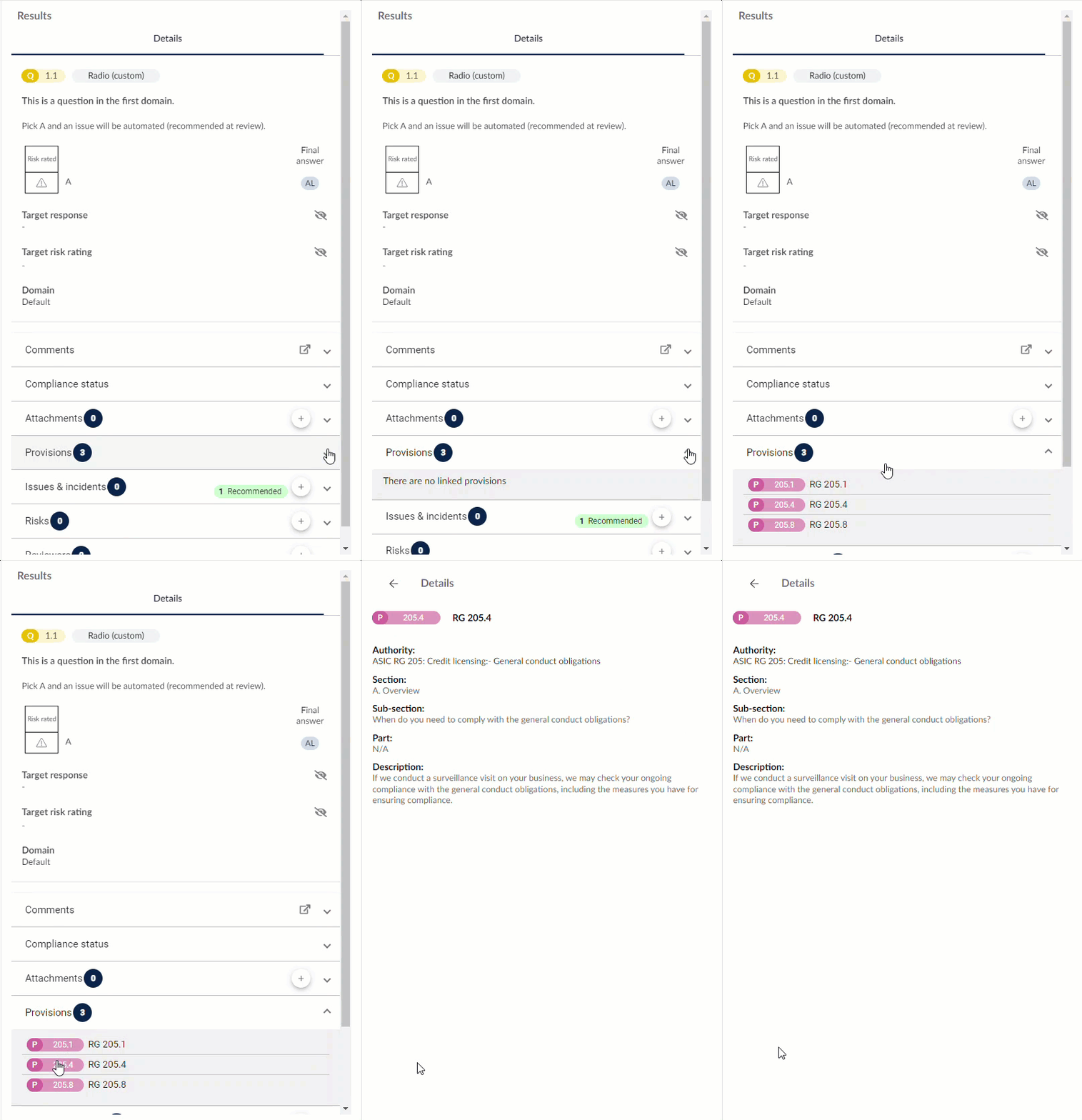
If the question is linked to controls or provisions, you can view these in the Provisions/Controls section. Click on the provision or control to view its details.
Linked issues & issue actions
You can link issues and issue actions to questions by using Hailey's suggestions, or choose from the recommended issues or actions from automation.
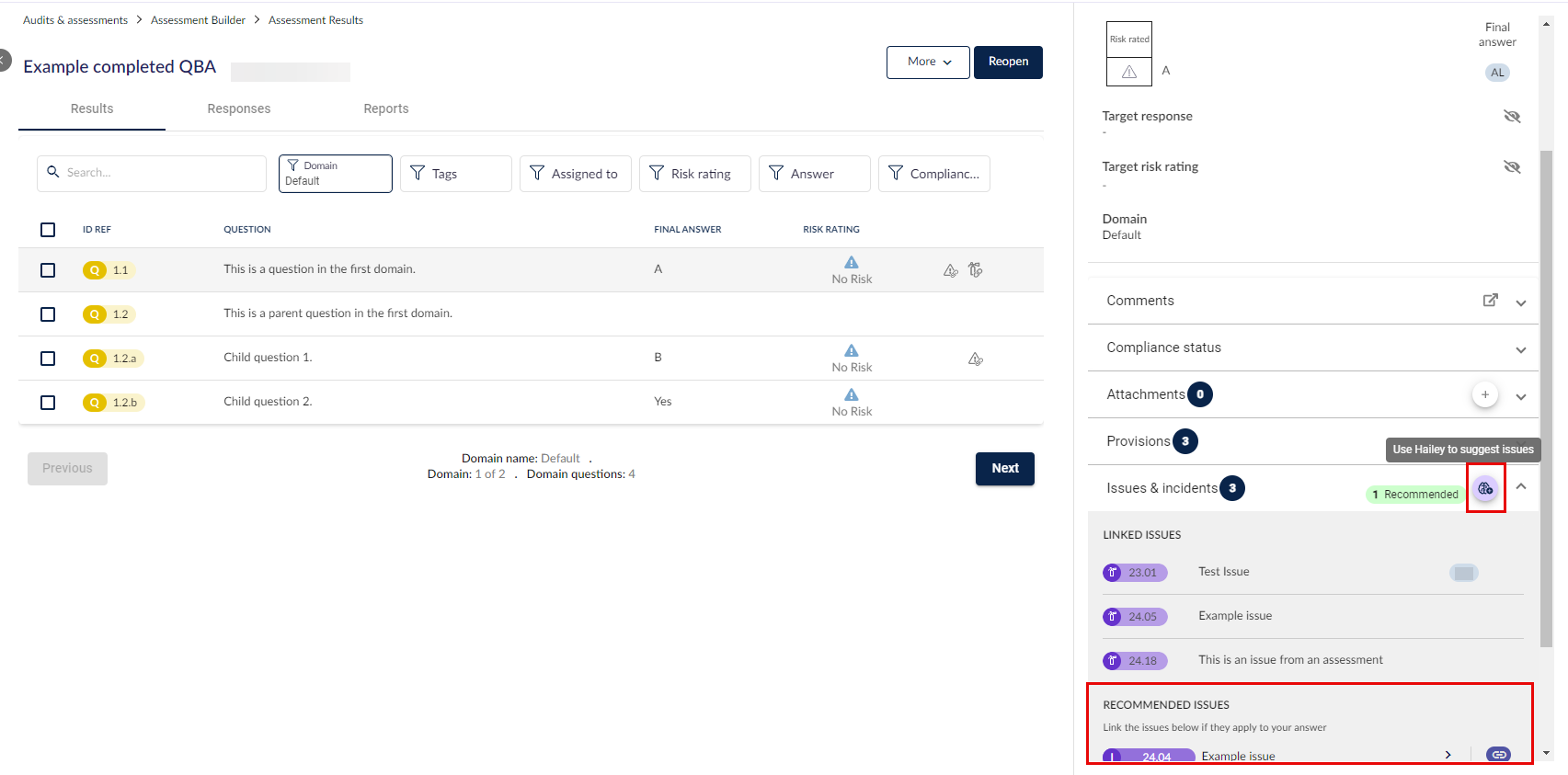
Click on the Hailey brain icon to see what issue Hailey suggests you should link to this question from the Issues Registers, ask Hailey to generate an issue using the information from the question & answer, or create/link issues yourself.
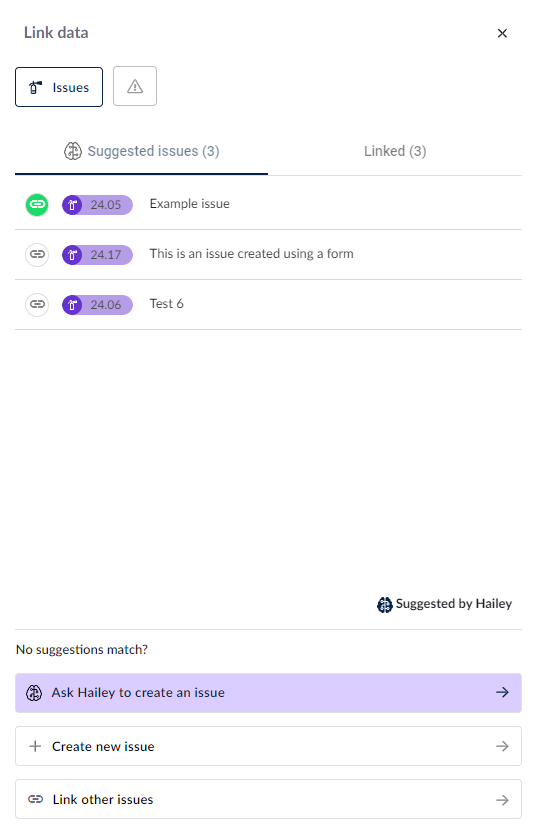
If you ask Hailey to create an issue, it will use available information from the question and answer to do so.
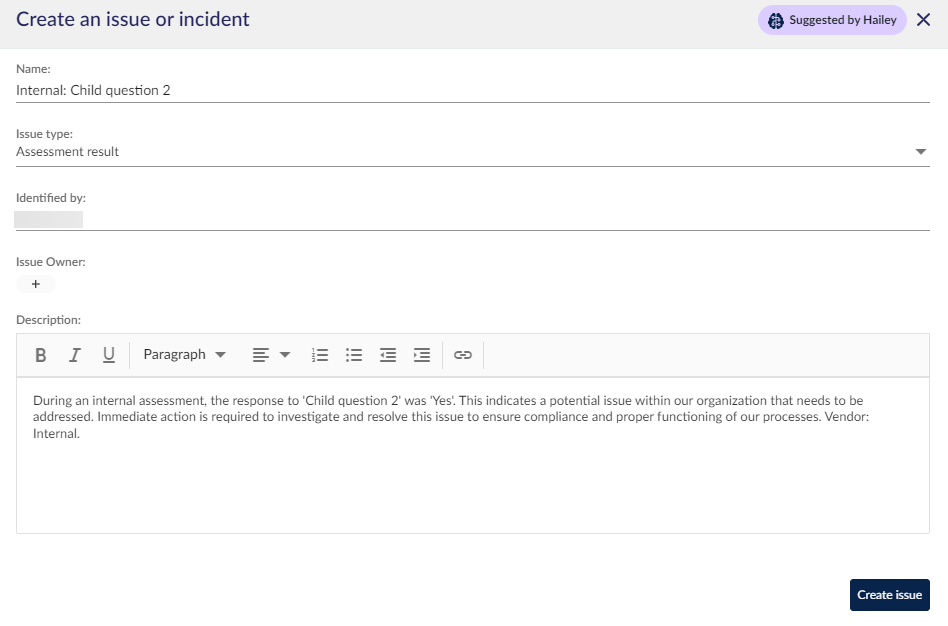
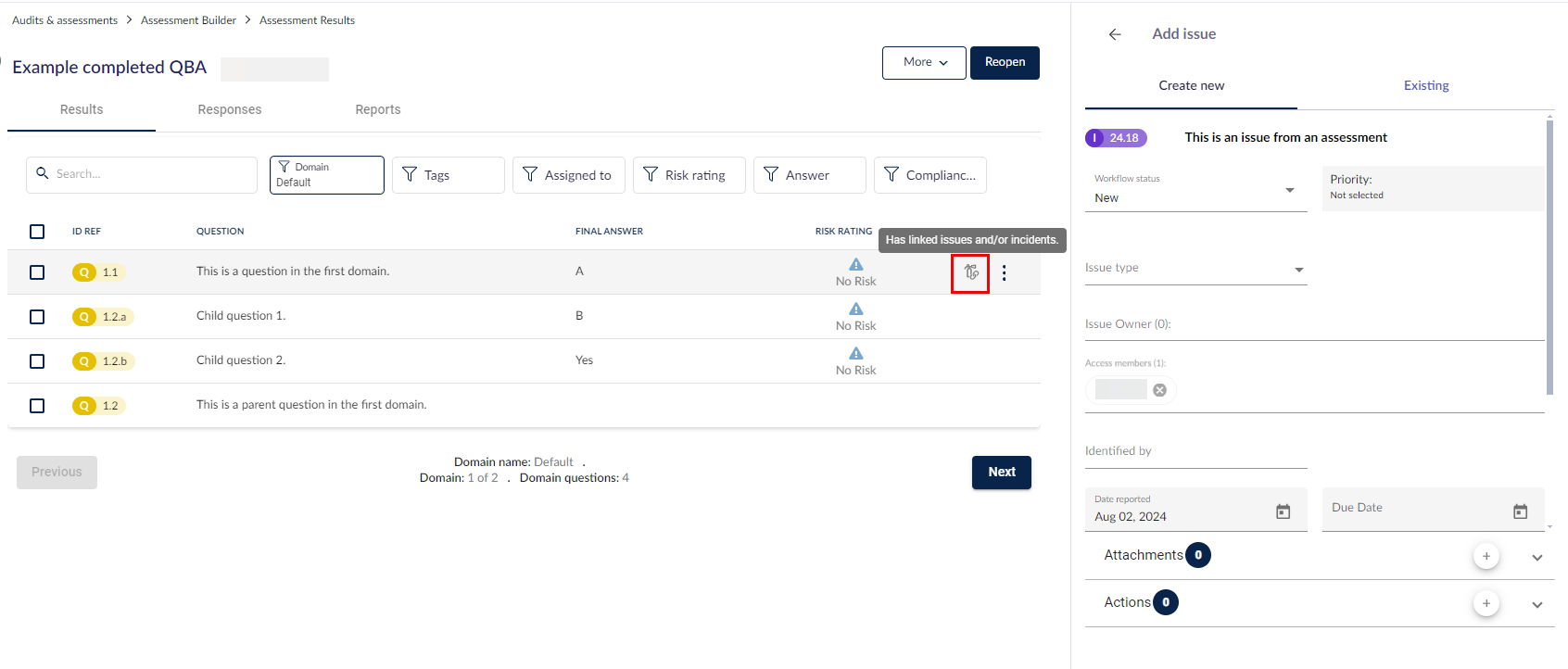
To create a new issue in your Issues Registers, enter the issue name and hit Enter, then fill out the details or do it later in the register.
To learn more about the different details of an issue, head here. You can also create issue actions for this issue here or in the register.
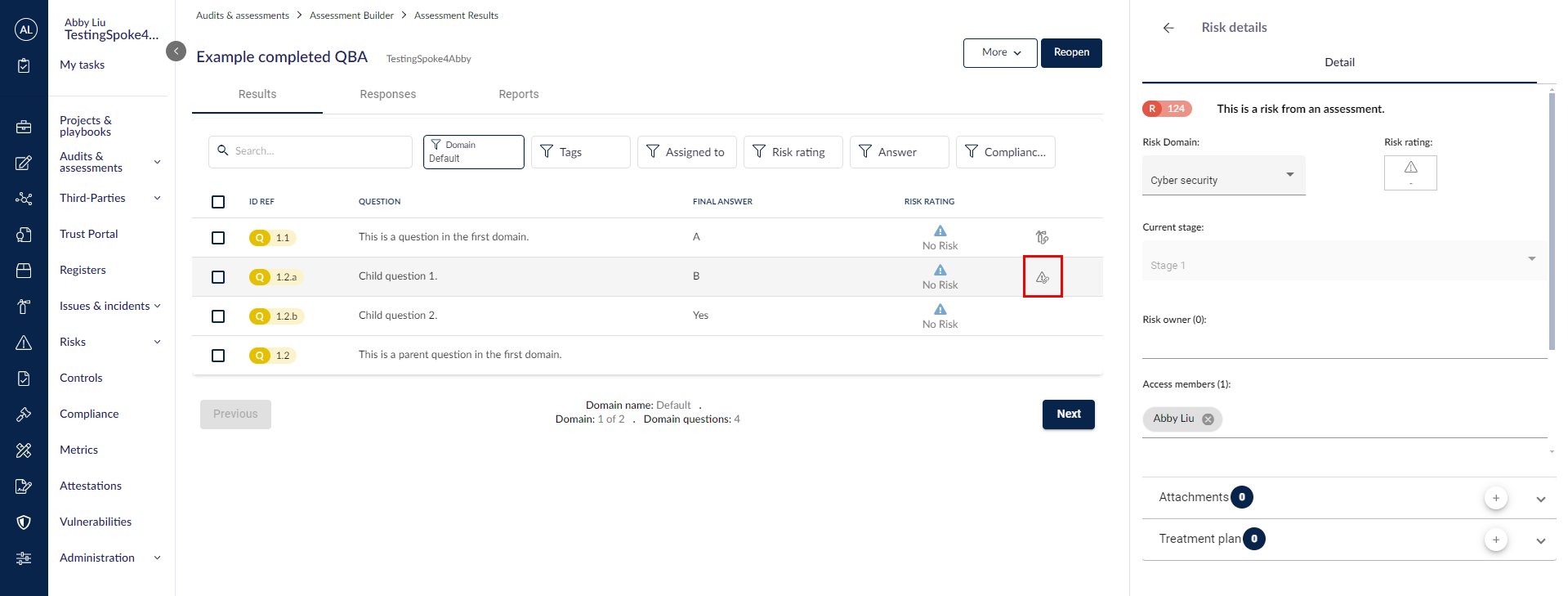
You can see an icon next to the question that indicates that it is linked to an issue.
Linked risks & risk treatment plans
You can link risks and risk treatment plans to questions by using Hailey's suggestions, or choose from the recommended risks or treatment plans from automation.
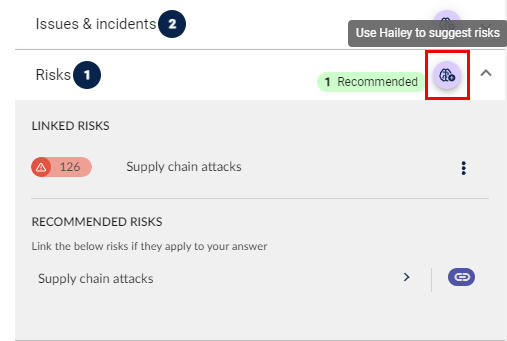
Click on the Hailey brain icon to see what risk Hailey suggests you should link to this question from the risk registers, ask Hailey to create a risk that is relevant to this question, or create/link risks yourself.
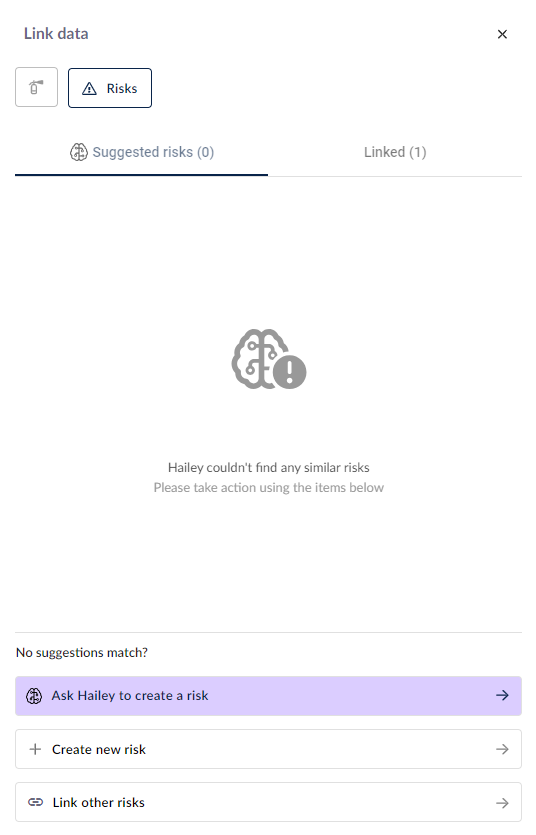
If you ask Hailey to create a risk, it will use available information from the question and answer to do so.
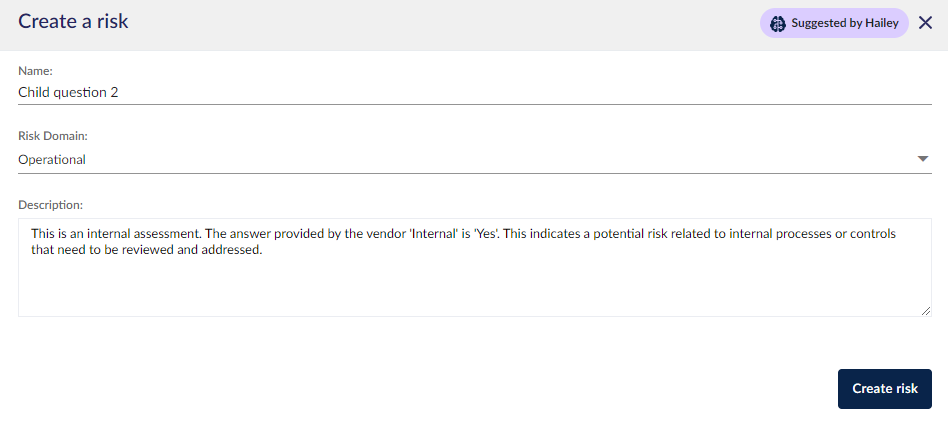
To create a new risk for this question in your Risk Registers, select the domain and give the risk a name, then hit Enter. Fill out the risk details or do it later in the register.
To learn more about the different details of a risk, head here. You can also create treatment plans for this risk here or in the register.
You can see an icon next to the question that indicates that it is linked to a risk.
Assigning reviewers to questions
You can assign users to review responses. Click on the + next to Reviewers, then select the user/s you would like to review the question. They will receive an email with a link that will take them directly to the question.
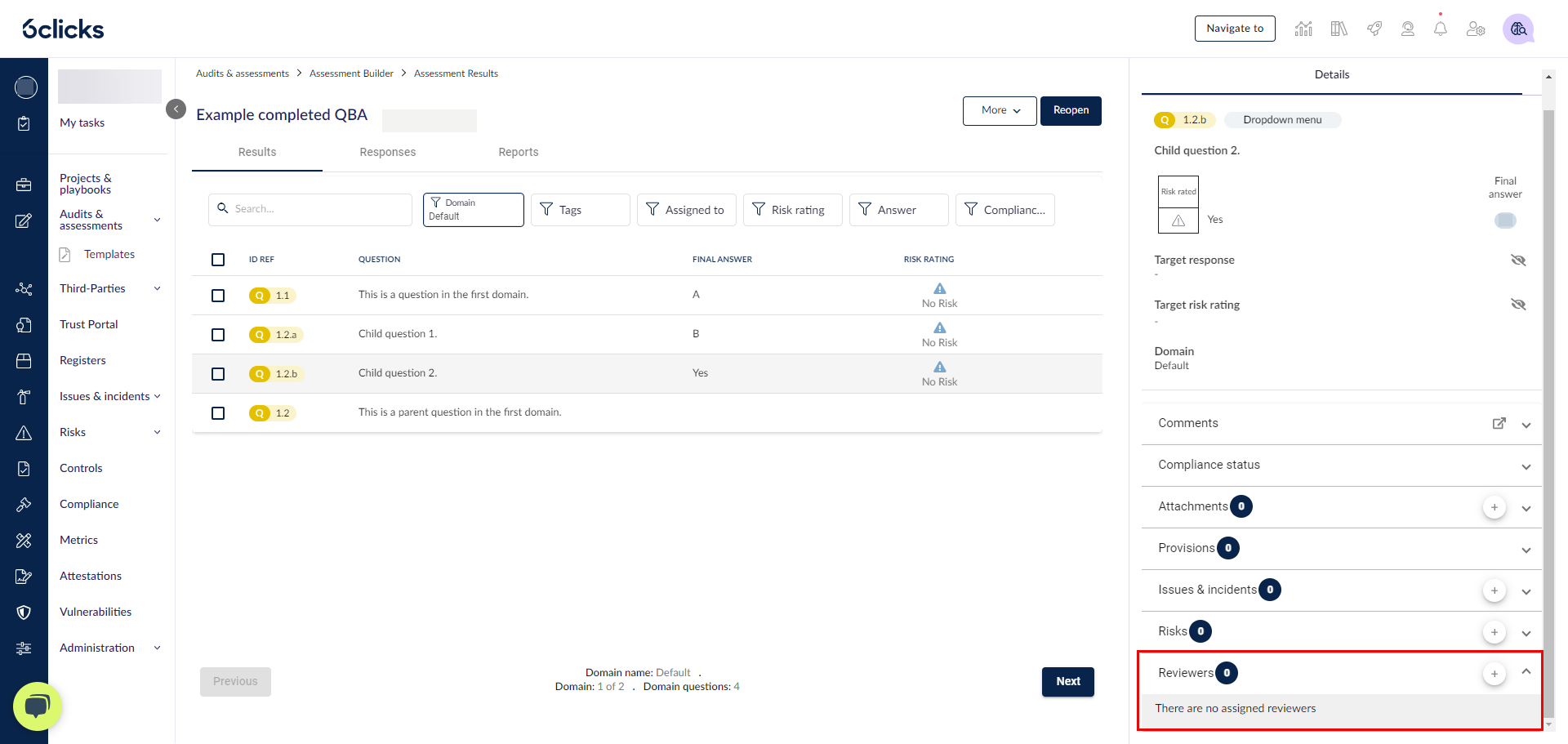
You can also bulk assign reviewers to responses by selecting the questions via the checkbox and then selecting the user you wish to assign.
View Analytics
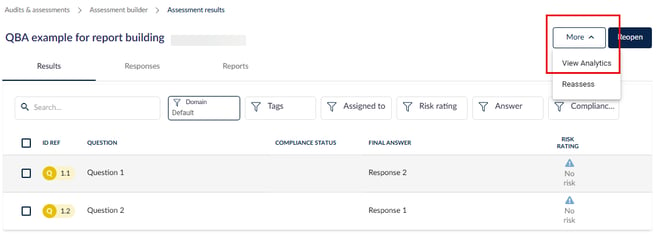
More > View Analytics takes you to the analytics module.
Reassess
More > Reassess allows you to reassess the third-party using the same questions under a new assessment.
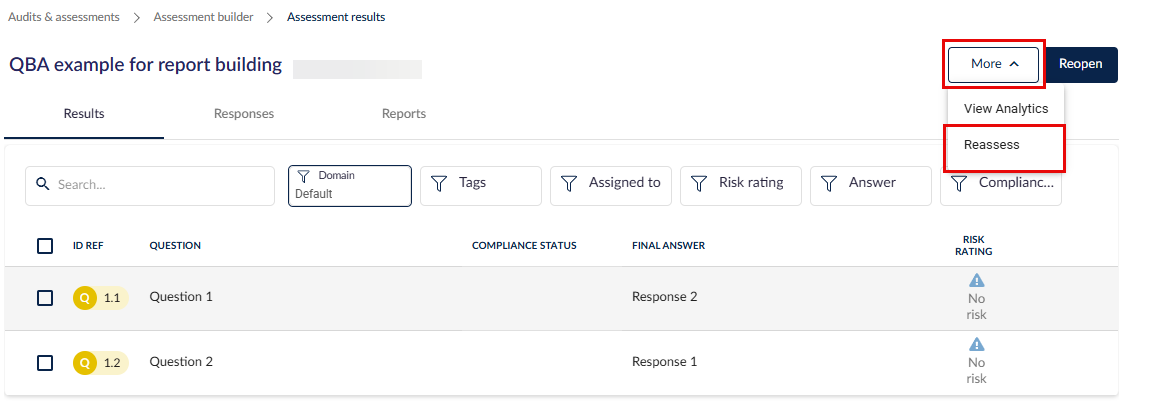
Select any question(s) marked as 'Not compliant' then Reassess.
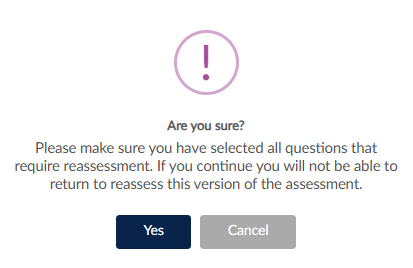
You will see this message. Click Yes to create a new assessment, which includes the questions you selected as well as the same third-party.
Your next step may be to close the assessment or to reopen it so that it can accept new responses to either the full assessment or to specific questions as determined during the review process.