
Table of Contents:
- Assigning Advisors to Spokes at the Hub
- Assigning a user group as Advisors to a Spoke
- Spoke History
- Inviting Advisors from within a Spoke
- Being assigned as an Advisor
- Removing an Advisor from a Spoke
- Deleting or deactivating a hub user who is also an advisor on one or more spokes
- Advisor Permissions within a Spoke
- Limitations of Advisor Access
Assigning Advisors to Spokes at the Hub
An individual who is to be an advisor for a spoke must be added as a user at the hub level of your tenant. For reference, this article will explain how to create new users, and this link will provide more information on user and role permissions.
Navigate to Spokes within the Hub and click on the name of the relevant Spoke to which you wish to add an advisor.
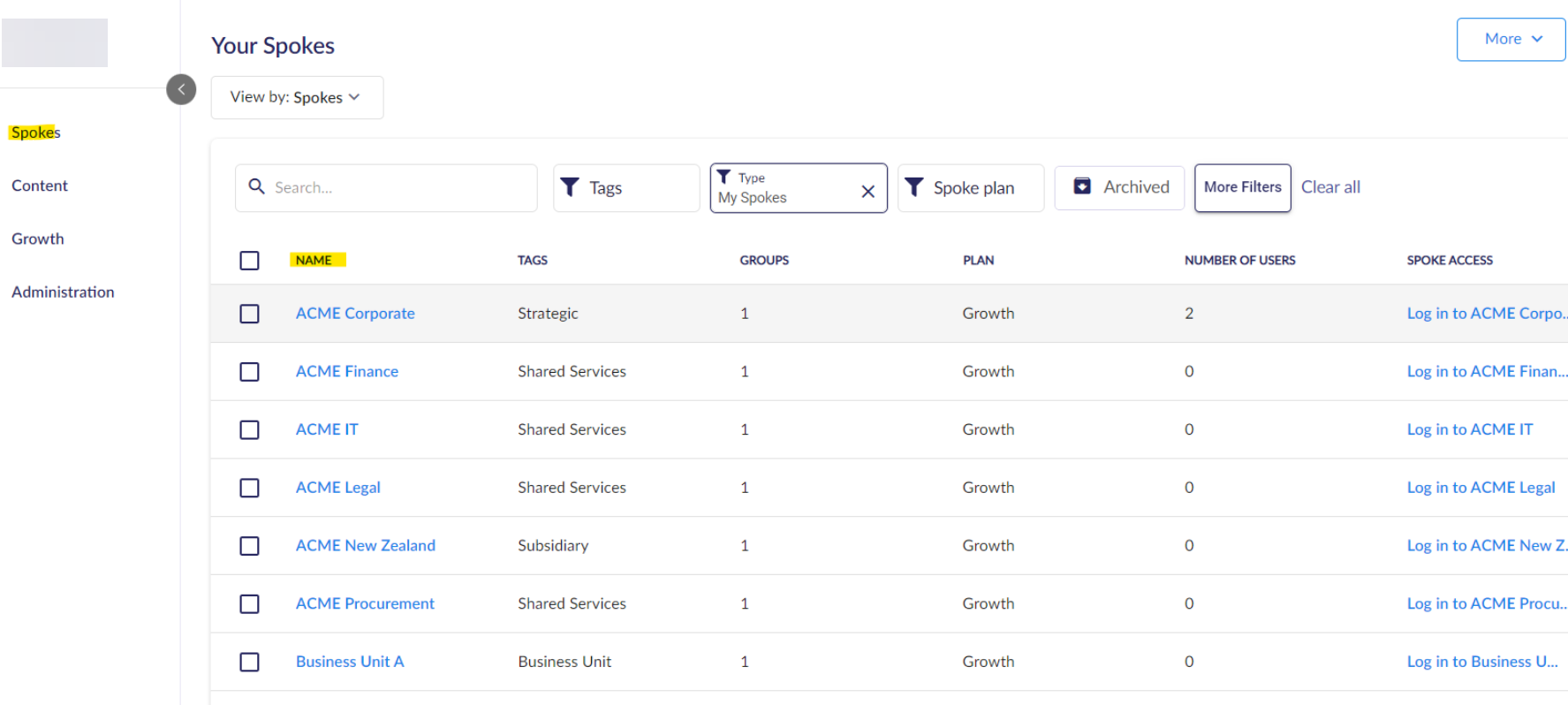
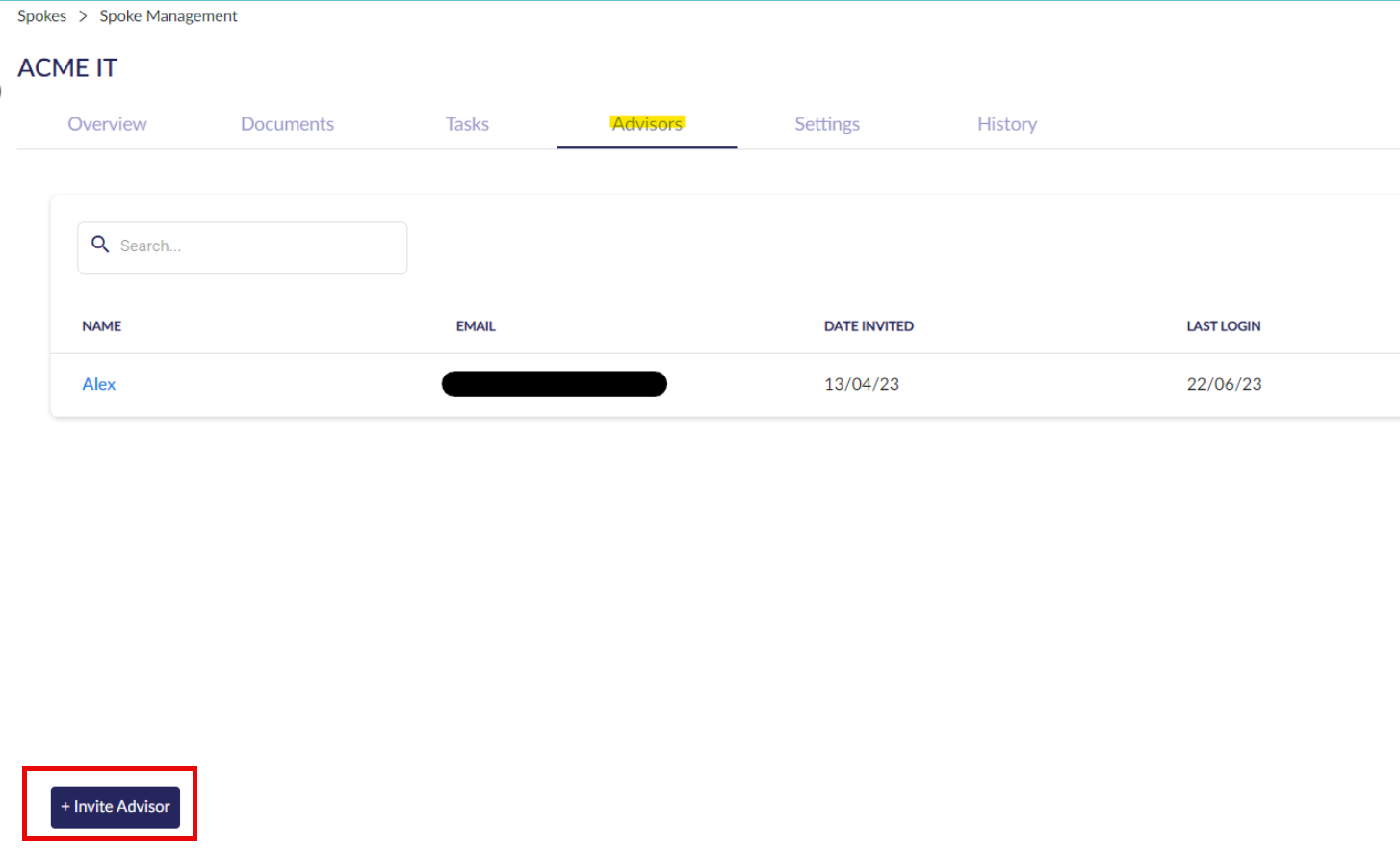
From here, click the Advisor tab and select + Invite Advisor at the bottom of the screen.
Enter the Hub user's name and click Invite to add them to the Spoke.

Assigning a user group as Advisors to a Spoke
Head to Administration > Groups and select the ellipses next to a group to edit its details or assign all users in the group to a Spoke.
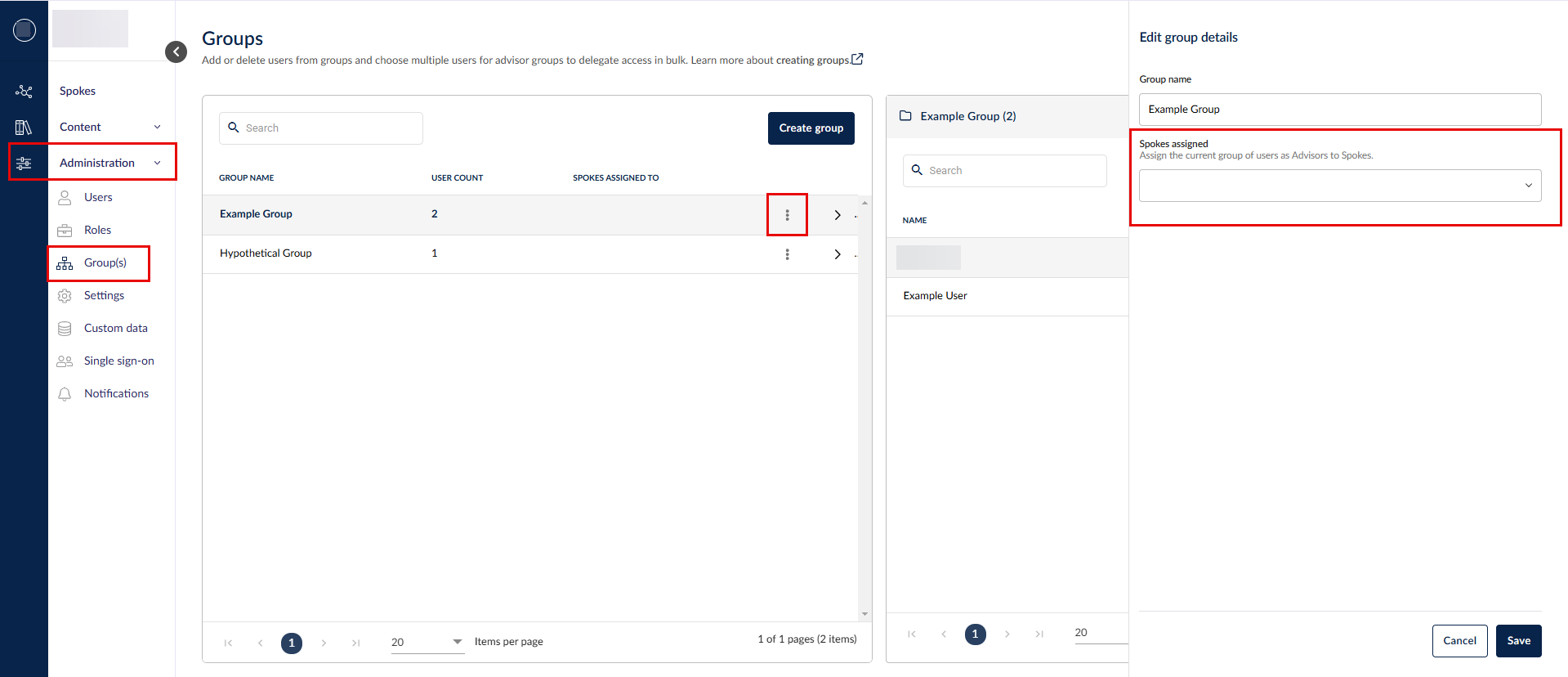
You will see a message about the action which will close automatically once the action is done.
Once users from this group are added to the Spoke as Advisors, you can find the group in the Spoke's Advisors tab.
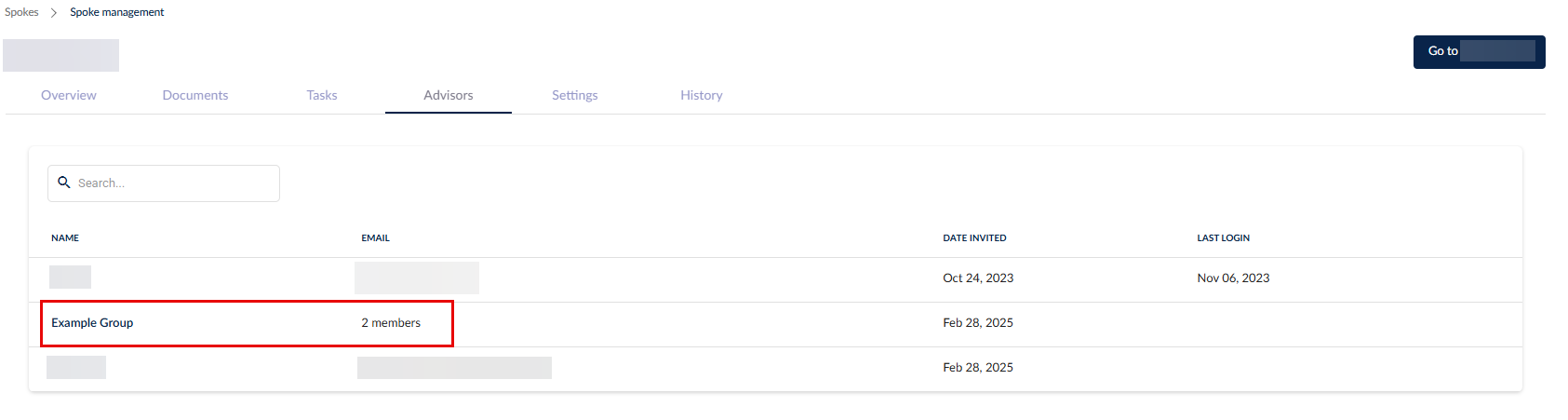
To remove the Advisor access that users in this group has for this Spoke, simply go back to Administration > Groups and edit the group's details again, and this time untick the Spoke and Save the update.
If your organization uses SSO at the hub and has JIT provisioning enabled, remember to add the advisor/s to the group in your IDP.
Spoke History
When an Advisor is added to or removed from a Spoke, an entry is automatically recorded in the Spoke History. This entry displays the name of the Advisor who was added or removed, along with the name of the user who performed the action.

Inviting Advisors from within a Spoke
From inside the spoke's dashboard, navigate to the Administration module and select Users (1).
This Users tab is different from normal Users tabs as it allows administrators the ability to manage both client Users and Hub Advisors.
To add an Advisor, navigate to the Advisor tab (2) and click Invite Advisor (3).
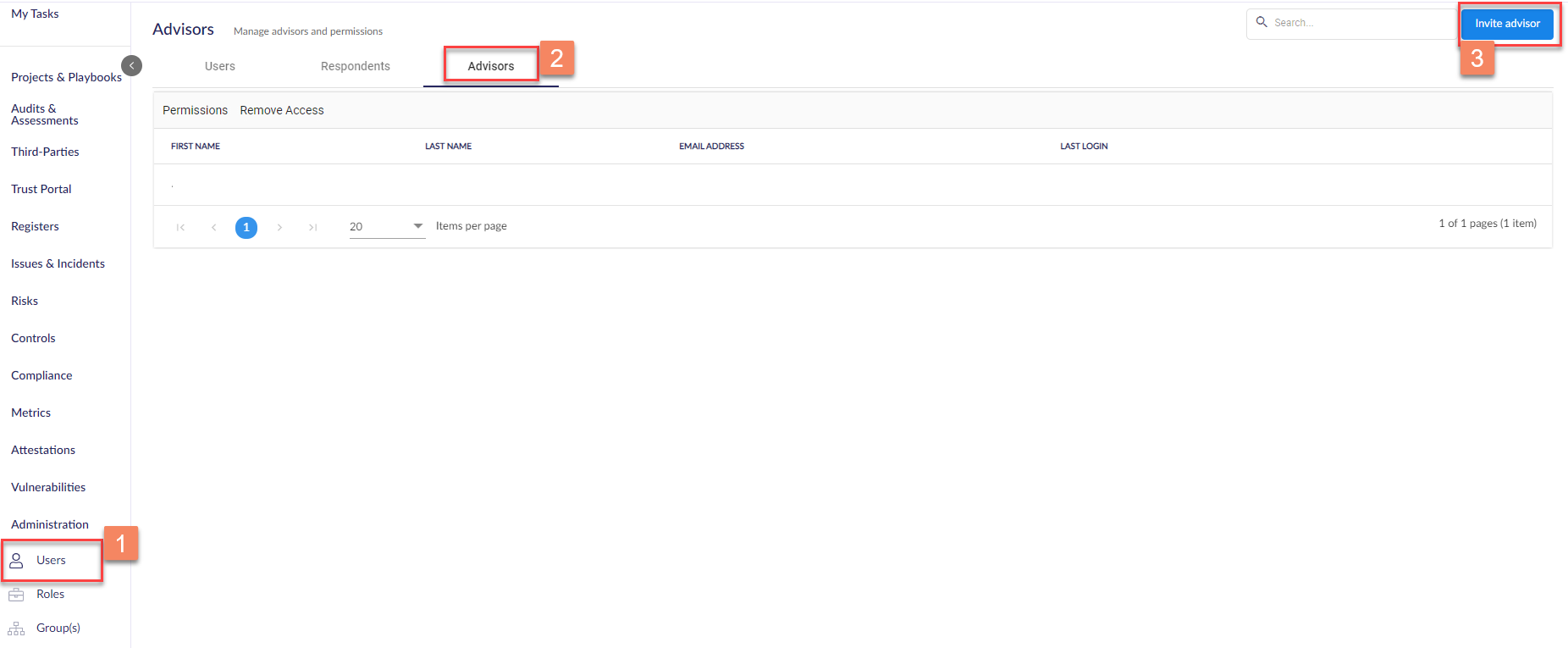
Ensure that the advisor to be added already exists in the Hub team. If they do not, you will see an error stating that the email does not exist.
Being assigned as an Advisor
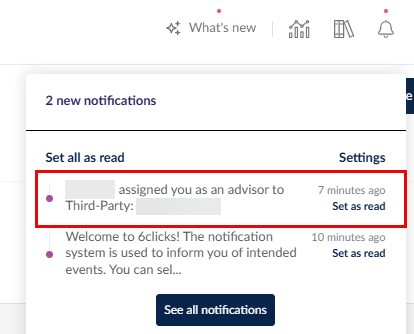
If you are invited to a Spoke as an Advisor, you will receive an in-app notification and an email for this assignment.
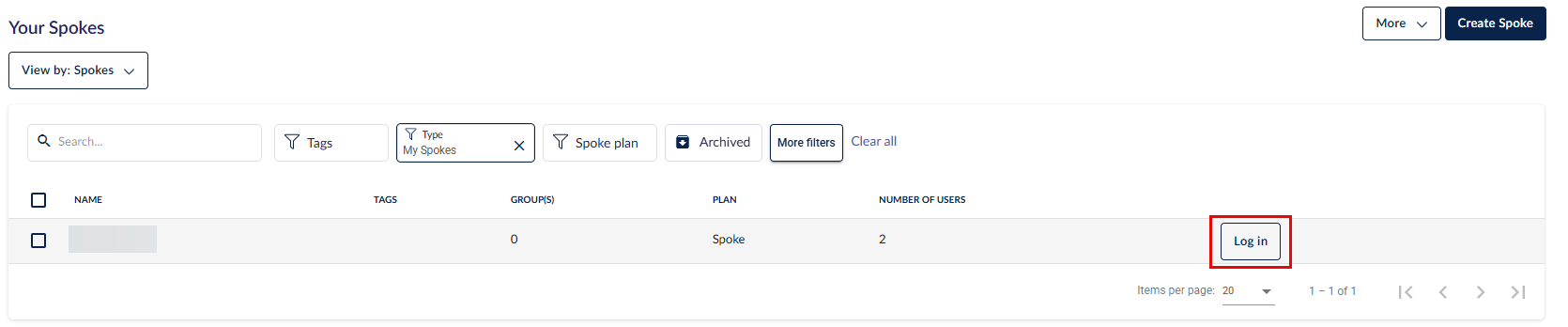
At the Hub, the Spoke team you were invited to will say Log in next to it. Click on Log in to go there.
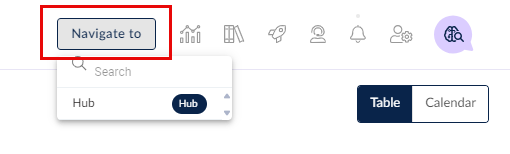
To navigate back to your Hub, simply click on Navigate to and select your Hub name.
Removing an Advisor from a Spoke
You can revoke the access that an individual Advisor has to a spoke at any time either from the hub or from within the spoke.
From the hub, navigate to your Clients/Spokes module and click on the team name. Click on the Advisors tab, select the advisor in question, click on the 3 vertical dots and select 'Reassign items' or 'Remove access'.

From the spoke, navigate to Administration > Users and select the Advisors tab. Select the advisor and choose to either 'Reassign items' or 'Remove access',
You will be prompted to confirm this action.
Deleting or deactivating a hub user who is also an advisor on one or more spokes
As a hub administrator, at some point you may need to deactivate or delete a user account from the hub and have that deletion also update any spokes to which that individual may have been assigned.
If the hub user you want to delete or deactivate is also a hub Administrator, you must first move them to another role (for example, User) and deselect the Administrator role. Please see this article for reference: Partner user management.
Deactivate:
When a hub user is deactivated, the individual performing the action will be presented with the following choices, as applicable.
Deactivate user & reassign items? (step 1). This is for items in this team, i.e., the hub.
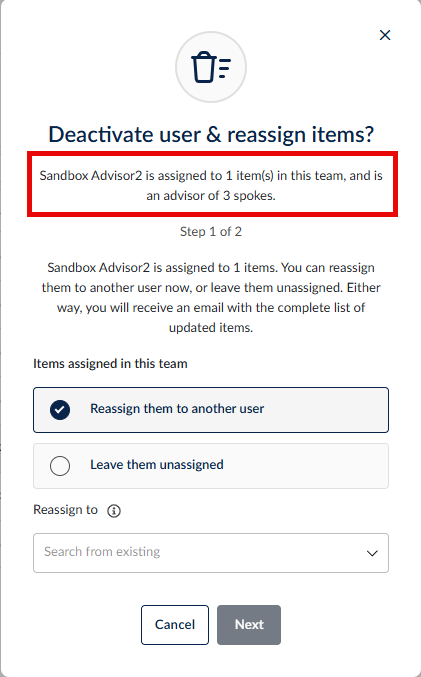
You can choose to 'Reassign them (the items) to another user', adding that user in the 'Reassign to' field below or to 'Leave them (the items) unassigned'.
Once you make your choice, and click Next, you will be asked about the actions you wish to take for the spokes to which this user is assigned.
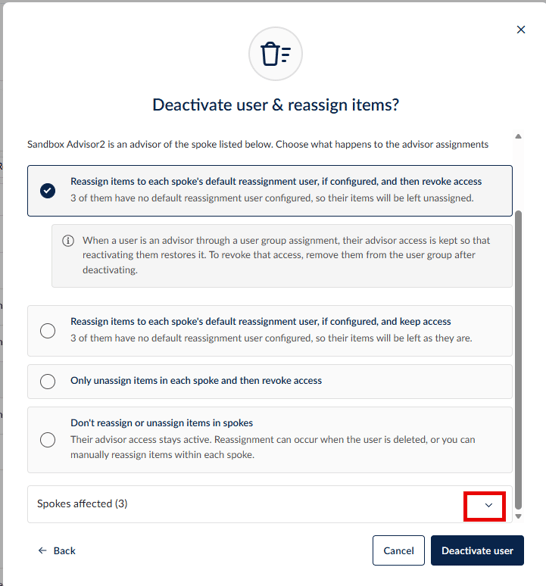
If you click on the down arrow next to the 'Spokes affected ...', you will see a list of spokes where this user has been assigned as an advisor. You will see where a default reassignment user has been assigned to a spoke. Read more about deleting users and bulk reassigning tasks in this article.
-
Reassign items to each spoke's default reassignment user, if configured, and then revoke access
-
Reassign items to each spoke's default reassignment user, if configured, and keep access
-
Only unassign items in each spoke and then revoke access
-
Don't reassign or unassign items in spokes
If the option references 'revoke access', the advisor will be deleted from the spoke.
If the option references 'keep access', the advisor will not be deleted from the spoke.
What you select will apply to all affected spokes. If you are uncertain what to choose for the short term because, perhaps, you want to add a default reassignment user or you wish to reassign manually within each spoke, when you deactivate the user, you can select 'Don't reassign or unassign items in spokes'. The hub user will be deactivated so the individual will not be able to login to 6clicks and you can decide later if and how you would like to reassign the items either from each spoke or when you delete the user at the hub.
Delete:
If you choose to delete a hub user who has been assigned to one or more spokes, when you select the user and click on 'Delete', you will receive the standard confirmation and be presented with the choices comparable to those for deactivating the user.
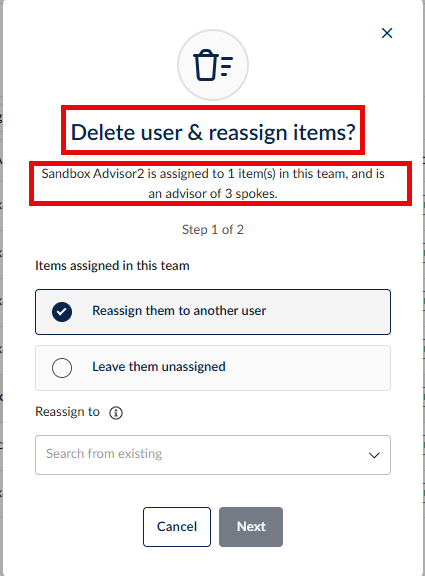
You can choose to 'Reassign them (the items) to another user', adding that user in the 'Reassign to' field below or to 'Leave them (the items) unassigned'.
Once you make your choice, and click Next, you will be asked about the actions you wish to take for the spokes to which this user is assigned.
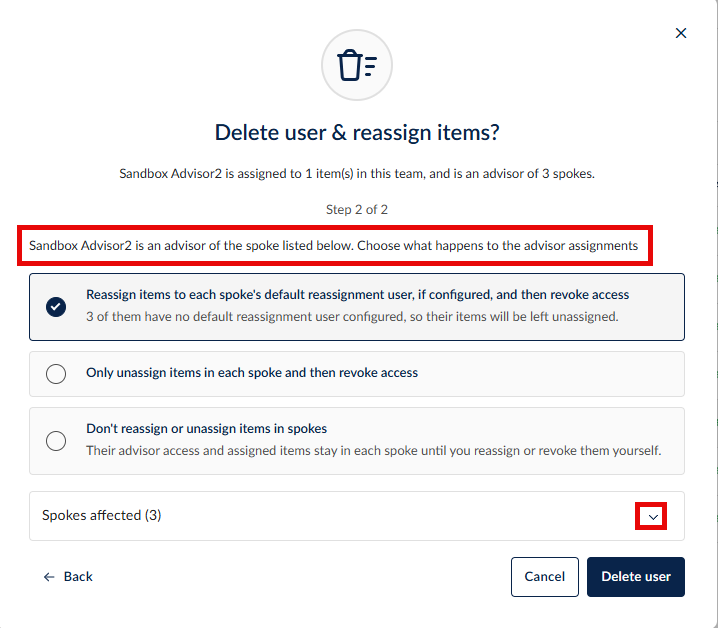
If you click on the down arrow next to the 'Spokes affected ...', you will see a list of spokes where this user has been assigned as an advisor. You will see where a default reassignment user has been assigned to a spoke. Read more about deleting users and bulk reassigning tasks in this article.
-
Reassign items to each spoke's default reassignment user, if configured, and then revoke access
-
Only unassign items in each spoke and then revoke access
-
Don't reassign or unassign items in spokes
If the option references 'revoke access', the advisor will be deleted from the spoke.
If the option references 'keep access', the advisor will not be deleted from the spoke.
What you select here will apply to all spokes. If you choose 'Don't reassign or unassign items in spokes', you will need to navigate to each spoke and reassign and or remove access for that advisor.
Advisor Permissions within a Spoke
The level of access Hub Advisors have within a spoke can be managed via the Administration Section within the spoke. When logged into the spoke, navigate to Administration > Roles. Select and edit the Advisor role.
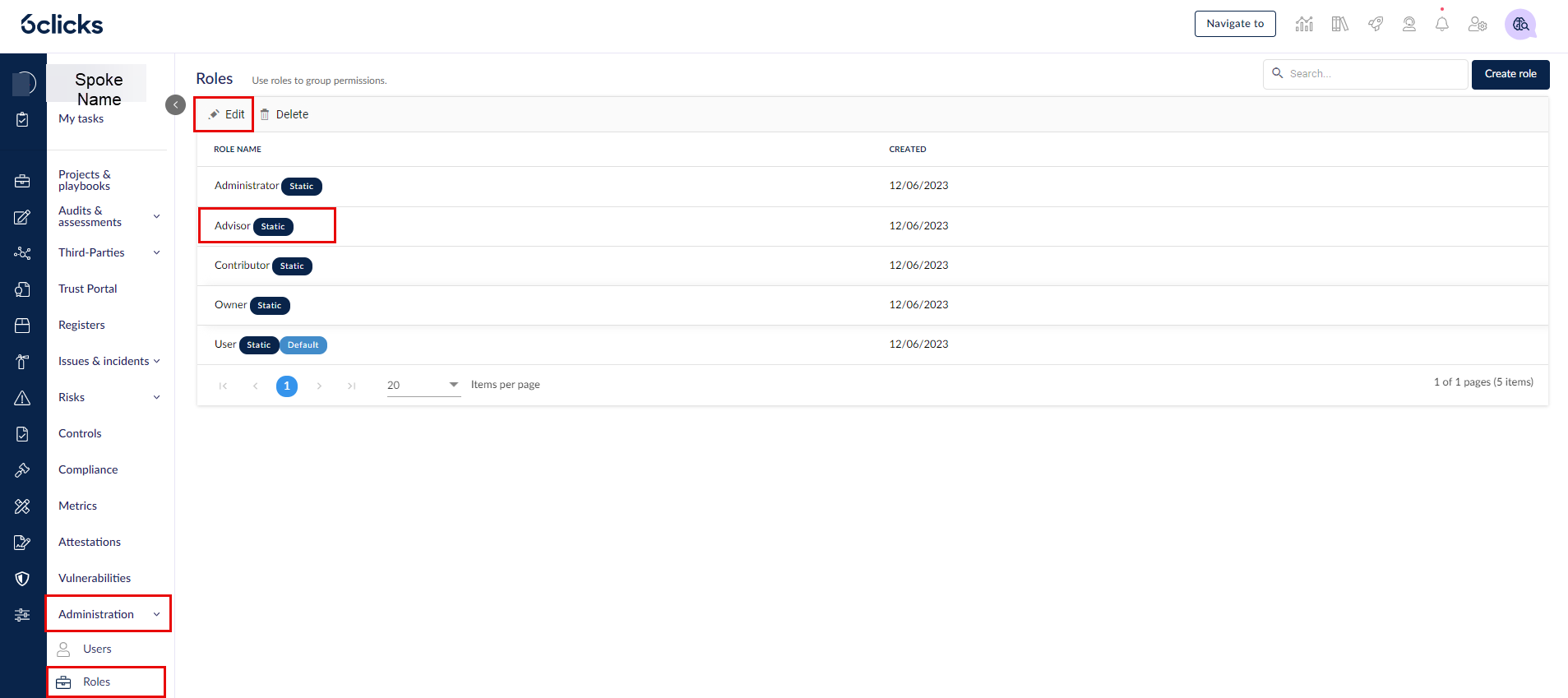
From here, Advisor permissions can be managed to ensure they have the appropriate level of access.
You can also manage access permissions on an individual basis for Advisors. To do this, navigate to Administration > Users and select the Advisor tab.
From here, select the relevant Advisor and click Permissions. This will open the Manage Permissions page for just that Advisor.
Limitations of Advisor Access
By default, Advisors have the same level of access to a Spoke as Spoke Administrators. As detailed above, this can be altered via changes to the Advisor role.
There are some notable limitations for this type of access:
- Advisors are not able to log in directly to the Spoke - Advisors must first log in to the Hub and then navigate to the Spoke
- Advisors are not able to impersonate Spoke users - this can only be done by Spoke Administrators
- Advisors are not affected by SSO configured for the Spoke - they are subject to Single Sign-On and other security settings applied to the Hub
To learn more about how Advisors are provisioned at the Spoke level, head here.